Across most of the country, October is when decks start to get put away. Furniture goes into the garage, the grill gets covered, and outdoor living takes a back seat until spring.
In Central Florida, we do things a little differently.
Around mid-October, the weather usually begins to change. The afternoon storms become less frequent, humidity drops, and cooler, drier air starts to arrive. The National Weather Service puts Orlando’s median start of the dry season at October 15. It also identifies October 19 as the median date for the first temperature below 60 degrees.
That is when outdoor living in Orlando starts getting really good.
The deck that felt too hot in August can suddenly become the best room in the house.
The sun is in a completely different place now
This is one of the most useful things to understand when designing a Florida deck.
Orlando sits at about 28.5 degrees north latitude. Around the summer solstice, the midday sun reaches roughly 85 degrees above the horizon. Around the winter solstice, it is only about 38 degrees above the horizon.
That is a huge difference.
And it changes the way shade works.
A horizontal roof or pergola can be very effective against the high summer sun because much of that sunlight is coming from above. In winter, the sun is much lower in the southern sky, so that same structure can block sunlight you actually want.
The answer is not to eliminate shade. It is to design shade more intelligently.
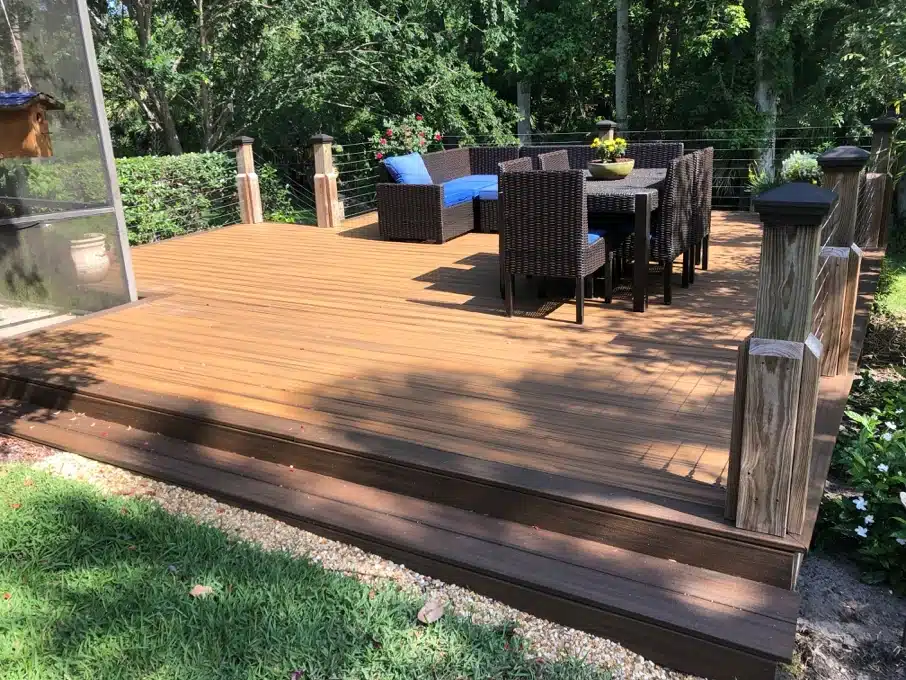
A good Central Florida deck can use several layers of shade instead of relying on one permanent solution. That might mean a pergola with carefully planned slats, a covered section next to an open section, retractable shade, or simply different areas of the deck designed for sun and shade.
The goal is flexibility.
You want somewhere cool and shaded when July is hot. You also want somewhere sunny when a beautiful January afternoon arrives.
That is why our outdoor living projects start with how the space will actually be used, not just how it looks in a photograph.
Orientation matters, too
The direction your deck faces can make a major difference to comfort.
A west-facing deck gets strong, low afternoon sun. That can be challenging during the summer, but the same winter afternoon sun can be warm and enjoyable.
A south-facing deck gets more direct winter sunlight during the middle of the day.
That should influence where you put seating, dining areas, shade structures and even the parts of the deck you leave open.
It costs very little to think about orientation when you’re designing a deck.
Changing it after the deck is built is another story.
It gets cool enough to matter
Florida has a reputation for being warm year-round, but Central Florida evenings can get surprisingly cool during the dry season.
The National Weather Service’s Orlando climate data shows average overnight lows around 50 degrees in January and the low 50s in February and December. November’s average low is in the upper 50s.
That matters because these are some of the months when people actually want to be outside.
Thanksgiving. Christmas. New Year’s Eve. Weekend dinners. Friends visiting from colder states. A quiet evening around the fire.
A deck should be designed for those moments, too.
Three things can make a surprisingly big difference.
1. A fire feature
A fire feature provides warmth, but it also gives the deck a focal point.
It changes the way people use the space. Instead of sitting inside once the temperature drops, people naturally gather around the fire.
Built-in fire features need to be planned carefully for clearances, surface protection and gas or electrical connections. That makes them part of the deck design, not something to figure out after construction.
2. Wind protection
Temperature isn’t the whole story.
A 55-degree evening can feel comfortable when the air is still and much less comfortable when a breeze is moving across the deck.
A partial screen, planter wall, carefully placed railing or other windbreak can make a big difference.
Good deck design is not just about adding things. Sometimes it is about putting the right thing in the right place.
3. Lighting
Winter also means earlier sunsets.
A deck with one bright light mounted overhead does technically provide illumination, but it does not necessarily create a space where people want to stay.
Layered lighting works better.
Low-level lights at steps, subtle lighting around seating areas and warm accent lighting can make a deck feel comfortable after dark without turning it into a parking lot.
The same principle applies to docks and other outdoor living spaces: lighting should help people see, but it should also help create the atmosphere.
The material question looks different in October
Surface temperature is an important consideration for Florida decking, especially in areas where people walk barefoot.
But it should not be the only consideration.
If your deck gets most of its use from October through May, you should also think about appearance, texture, maintenance, moisture and how the material looks throughout the year.
Composite decking can be a good choice for homeowners who want a lower-maintenance outdoor space. Wood decking offers a natural appearance that many homeowners prefer and can be an excellent option when it fits the project and maintenance expectations.
There is no single “best” decking material for every Central Florida home.
A shaded dining deck has different priorities from a sunny pool deck.
A deck beside the water has different requirements from a small backyard entertaining space.
The right question is not simply, “Which material is best?”
It is:
“Which material makes the most sense for the way we are actually going to use this deck?”
If you’re comparing materials, we’ve also looked at options such as TimberTech and Trex and the wider range of composite decking available today.
We build with both composite and wood, so our recommendation starts with the project rather than a particular product.
This is a good time to start planning
Central Florida’s weather also affects when a deck project makes sense.
The rainy season typically begins around late May, while the median start of the dry season in Orlando is October 15.
That does not mean it never rains between October and May or that summer construction is impossible. It means weather is an important part of planning any outdoor construction project in Florida.
Rain can interrupt excavation, concrete work, framing, material deliveries and other parts of a project. A realistic schedule should account for that.
It also pays to start the design process before you are ready for construction.
A custom deck involves more than choosing boards. You are making decisions about layout, stairs, shade, lighting, seating, drainage, access, materials and how the deck connects to the house and yard.
If you want to be enjoying a new deck during the next cool-weather season, the design conversation should start well before you expect to use it.
What we’d change about most Orlando decks
After years of designing and building outdoor spaces in Central Florida, a few patterns come up again and again.
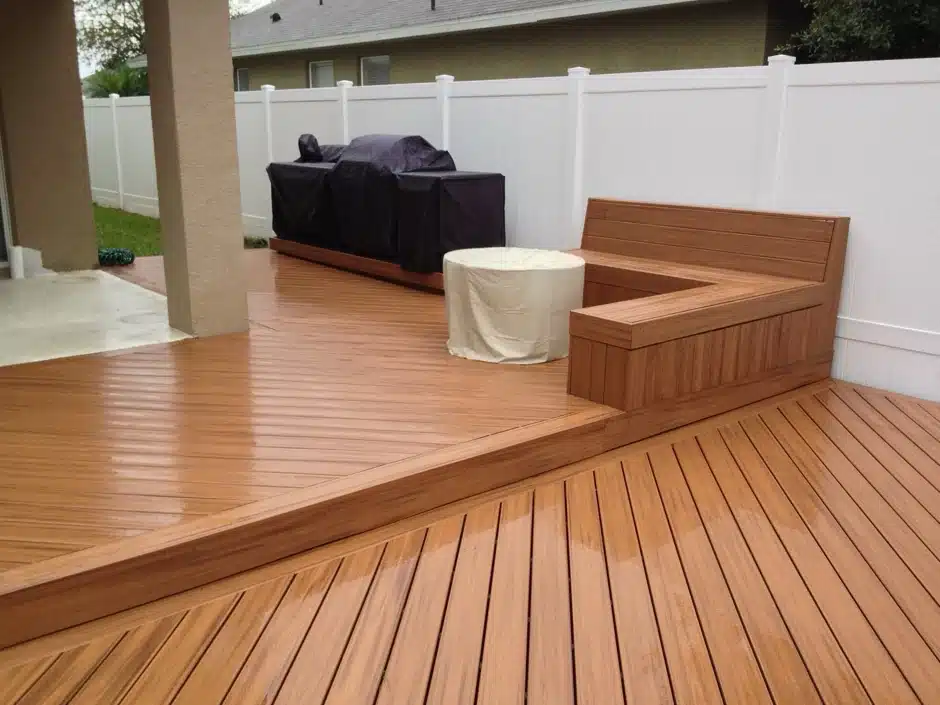
- Shade that’s all or nothing. A completely covered deck is not always the best answer. A combination of covered and open areas can give you more flexibility throughout the year.
- Seating that faces the house instead of the view. If your property has a lake, mature oaks, a pool, a garden or a beautiful western sky, the deck should take advantage of it.
- No plan for wind. A deck can look great on paper and still be uncomfortable if prevailing breezes are ignored.
- One bright light overhead. Good outdoor lighting is layered. It should make the space easier to use without making it feel harsh.
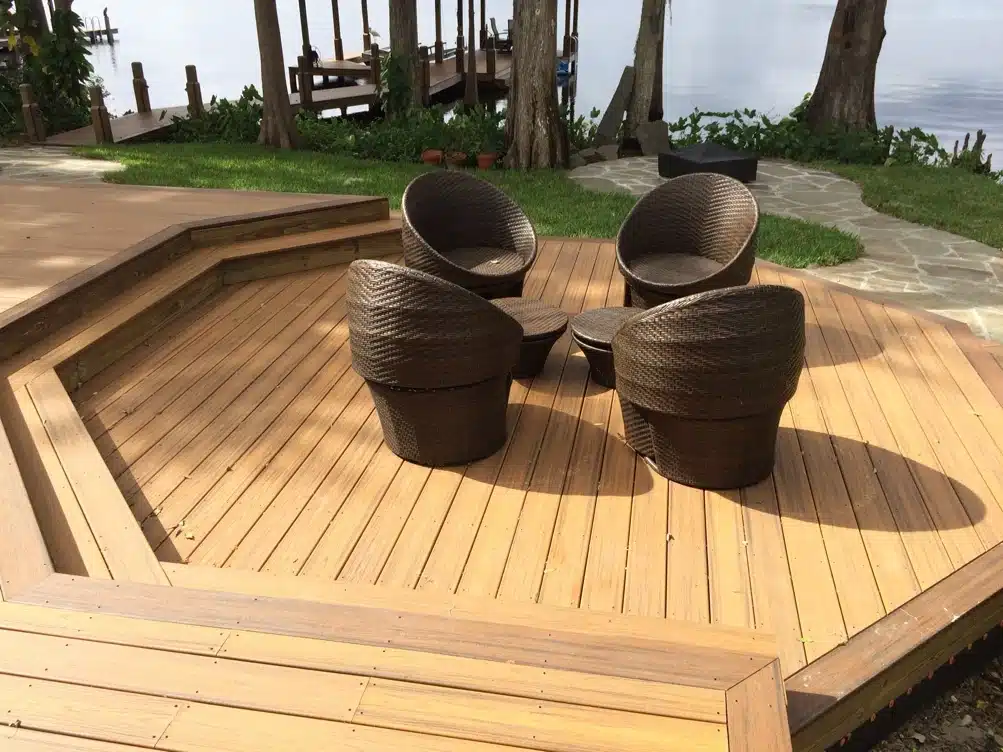
- One large flat area. Different levels, built-in seating or changes in elevation can create distinct spaces for dining, relaxing and entertaining when the property allows it.
- Furniture added as an afterthought. Built-in seating, planters and other features can be incorporated into the deck design from the beginning instead of trying to squeeze them in later.
None of these decisions has to be complicated.
The important part is making them before construction begins.
You should be able to understand how a custom deck will look and function before materials are cut and construction begins. Summertime Deck & Dock has been designing and building outdoor spaces in Central Florida since 2008, with a focus on decks, docks and outdoor living.
Common questions about Central Florida decks
When is the best time to build a deck in Central Florida?
There is no single perfect month, but the October-through-May dry season generally provides more favorable weather for outdoor construction than the wetter summer months.
The National Weather Service identifies October 15 as the median start of the dry season in Orlando and May 27 as the median start of the wet season.
The most important thing is to plan ahead. A custom deck involves design, permitting, material selection and construction, so starting the process early gives you more control over the schedule.
When is deck season in Florida?
In Central Florida, some of the best months for using a deck are roughly October through May.
That does not mean decks aren’t used during the summer. They absolutely are. But the cooler, drier months are often more comfortable for outdoor dining, entertaining and spending long evenings outside.
How should shade be designed on a Florida deck?
Shade should be designed around the way the sun moves throughout the year.
In Orlando, the midday sun is very high during the summer and much lower in the winter. That means a fixed roof can provide excellent summer shade while also blocking winter sunlight.
Combining covered and open areas, pergolas, adjustable shade and thoughtful deck orientation can make the space more comfortable across more of the year.
Does deck orientation matter in Central Florida?
Yes.
West-facing decks receive strong afternoon sun, while south-facing areas can receive useful winter sunlight during the middle of the day.
Orientation should be considered when deciding where to put seating, dining areas, shade structures and other features.
What makes a deck usable on cool Florida evenings?
Think about wind, warmth and lighting.
A fire feature can provide both warmth and a focal point. Windbreaks can make an exposed deck more comfortable. And layered outdoor lighting can keep the space inviting after the sun goes down.
How cold does it get on a Central Florida deck in winter?
It can get colder than many people expect.
The National Weather Service identifies October 19 as Orlando’s median date for the first temperature below 60 degrees and November 5 as the median date for the first temperature below 50 degrees.
Average January overnight lows at Orlando are around 50 degrees, so designing for cool evenings is worthwhile.
Is composite or wood better for a Central Florida deck?
Both can be good choices.
Composite decking generally requires less routine maintenance, while wood provides a natural look that many homeowners love but requires more ongoing care.
The best choice depends on the design, location, budget, maintenance expectations and how you plan to use the deck.
For example, a shaded outdoor dining area may have different priorities from a sunny pool deck where people will regularly walk barefoot.
The best outdoor months are about to start
We’re a family-owned company based in Orlando, and we’ve been building decks, docks and outdoor living spaces across Central Florida since 2008.
Robin came to this work from aerospace engineering, and that background influences the way we approach design and construction. We like to understand how a project will work before we start building it.
That includes thinking about where the sun will be in January, where people will sit, how the space will be used at night and what will make the deck comfortable in both summer and winter.
If you have a deck you barely use, or you have a yard that deserves a better outdoor living space, now is a good time to start the conversation.
Central Florida gives us something much of the country doesn’t have: months of genuinely enjoyable outdoor weather during the cooler part of the year.
Your deck should be designed to take advantage of it